Why Nesting at ‘Octopus Garden’ Helps Female Octopuses Give Their Young a Better Shot at Survival
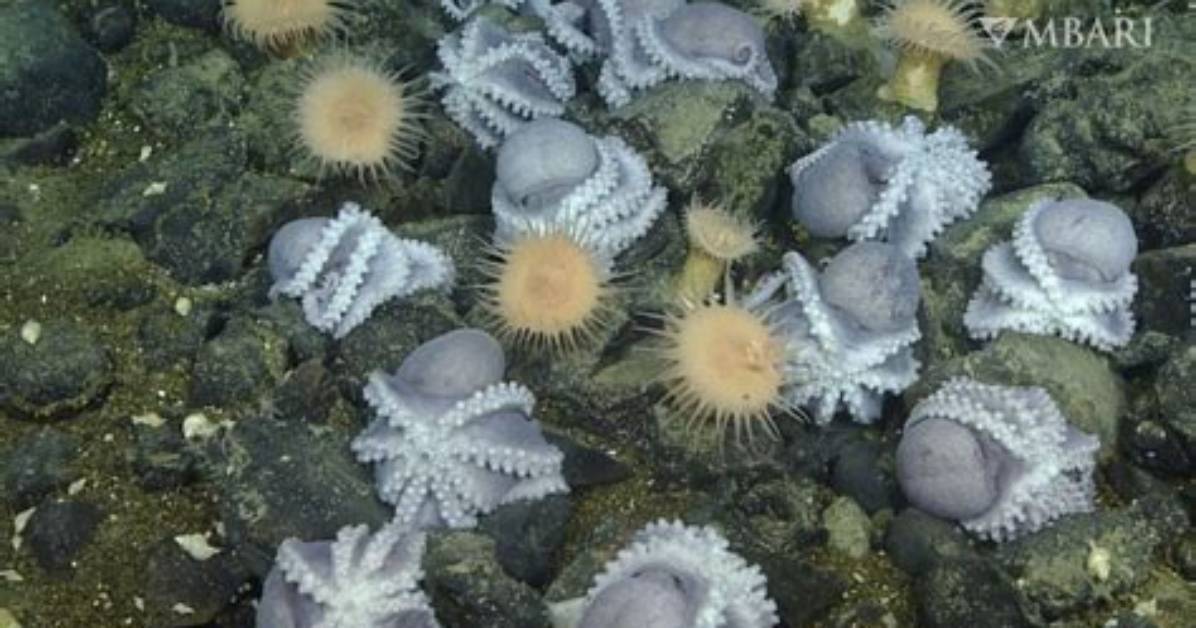
Two Miles Below the Ocean Surface off Monterey, California, Warm Water Percolates from the Seafloor at the Base of an Underwater Mountain. It’s a Magical Place, Especially If You’re an Octopus.
Frequently Asked Questions
Life in the Octopus Garden
Female Octopuses Seek out Rocky Cracks and Crevices Where Warm Water Seeps from the Rocks. There, They Vigilantly Guard Their Broods. Subsisting off Their Energy Reserves Alone, These Mothers Will Never Eat Again. Like Most Cephalopods, They Make the Ultimate Sacrifice for Their Offspring and Die After Their Eggs Hatch.
Warmer Water Speeds up Embryo Development
A New Generation of Octopuses Must Overcome at Least Two Hurdles Before Hatching.
Nurseries Highlight Risks to Seafloor Habitat
The Thermal Springs at the Octopus Garden Are Part of a Ridge Flank Hydrothermal System. Here, Water Percolating Beneath the Seafloor Picks up Heat from Earth’s Mantle Before It’s Channeled out from Volcanic Rock Outcrops Like Davidson Seamount. These Systems Have Become an Emerging Focus in Seafloor Geology, Though Only a Few Have Been Discovered So Far.