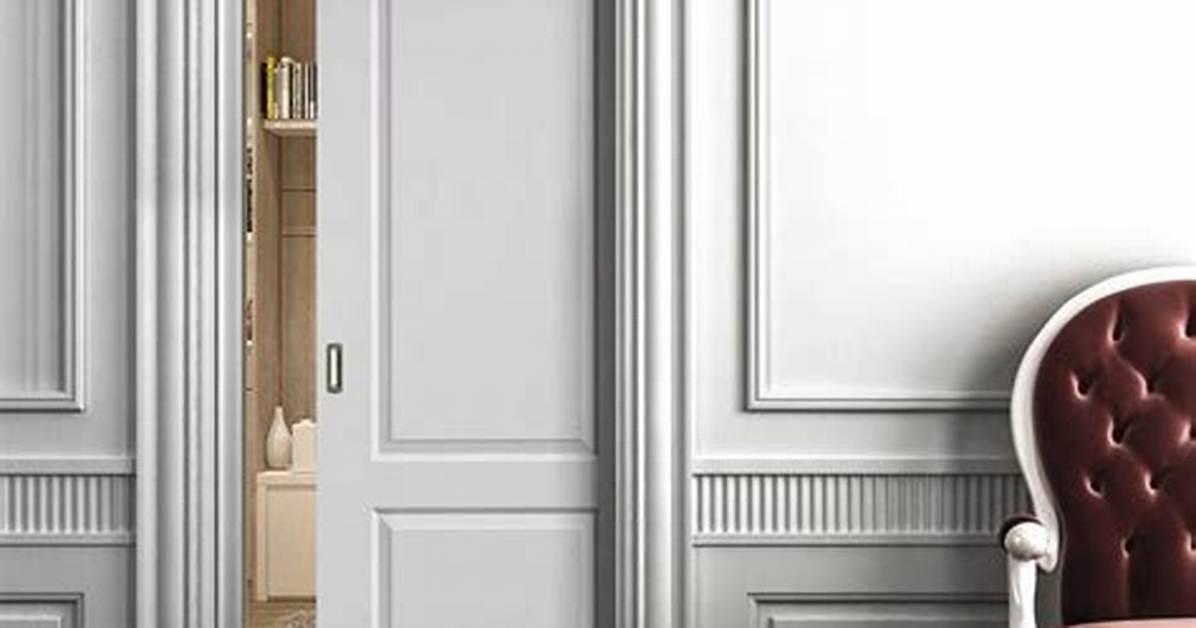
When Did Pocket Doors Become Popular?
Pocket Doors Originated in the 1850S, When They Appeared Both in the Uk and the Us. Their Popularity Grew in the 1880S as Technological Improvements Were Made to the Installation Methods. However, in the Mid 1920S, Their Popularity Began to Fade and Hinged Doors Became More Fashionable.
Frequently Asked Questions
What Were Pocket Doors Used for?
A Pocket Door Is a Sliding Door That, When Fully Open, Disappears into a Compartment in the Adjacent Wall. Pocket Doors Are Used for Architectural Effect, or When There Is No Room for the Swing of a Hinged Door. They Can Travel on Rollers Suspended from an Overhead Track or Tracks or Guides Along the Floor.
Why Did Pocket Doors Go Away?
Pocket Doors Were Popular in the Late 1800S, Especially in Victorian Houses. They Had a Resurgence of Popularity in the 1950S. but Because Pocket Doors from the Past Ran Along Raised Tracks on the Floor, the Tracks Were a Tripping Hazard, So Builders and Homeowners Avoided Pocket Doors When Possible.
What Do You Call the Pocket on a Car Door?
It’s Called a Map Pocket. the Most Common Components of the Car Door Consist of the Following Items: Door Card.
Is a Pocket Door Just a Slab Door?
Pocket Doors Are an Ideal Way to Save Space. Unlike Traditional Swinging, Pocket Doors Slide Right into Your Wall, Saving up to 10 Square Feet. Rustica’s Wood-Framed Pocket Doors Do Not Come Pre-Fabricated for the Edge Pull nor the Pocket Door Hardware. …
What Kind of Door Is a Pocket Door?
Pocket Door. a Pocket Door Is a Sliding Door That Disappears, When Fully Open, into a Compartment in the Adjacent Wall. Pocket Doors Are Used for Architectural Effect, or When There Is No Room for the Swing of a Hinged Door.
Where Did the Invention of the Door Come from?
The First Recorded History of Doors Was Found in Egyptian Tomb Paintings 4000 Year's Ago. No One Knows Who Invented the Door, Only That It Was First Incepted Somewhere in Central Egypt. in Agent Egyptian Architecture, a False Door Was a Wall Decoration That Looked Like a Window, It Was Common in Tombs and Represented a Gate to the Afterlife.