What Is the Effective Annual Rate Ear Quizlet?
Terms in This Set (12) the Effective Annual Rate (Ear) Is the Actual Rate of Interest Paid (Or Received) After Accounting for Compounding That Occurs During the Year.
Frequently Asked Questions
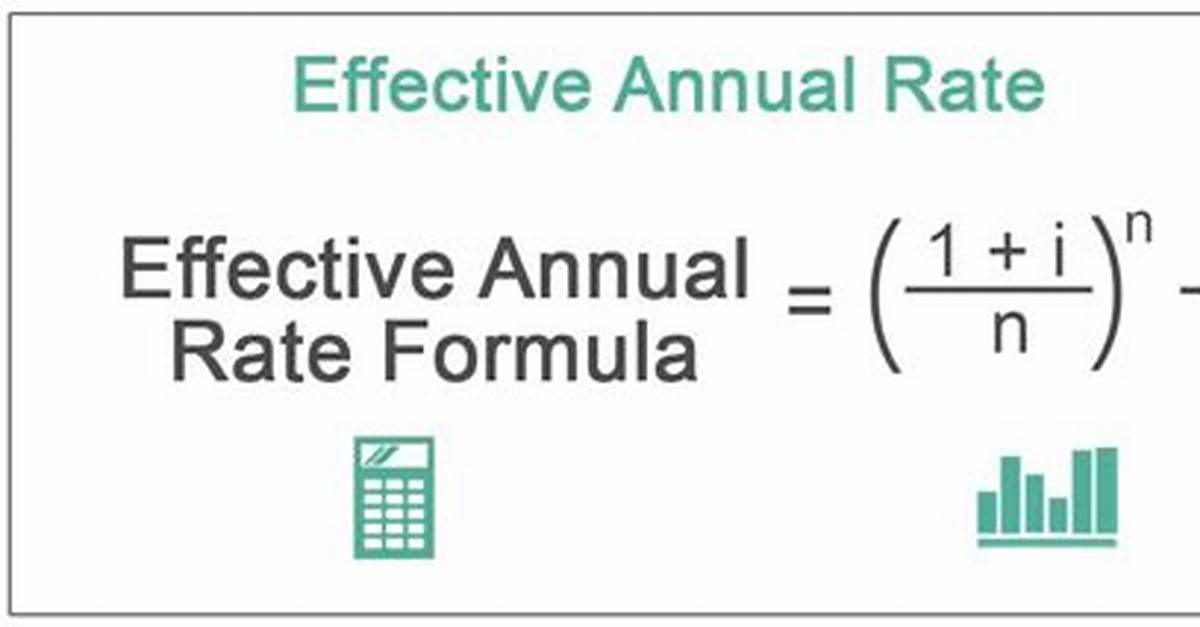
What Is the Effective Annual Rate Formula?
The Formula and Calculations Are as Follows: Effective Annual Interest Rate = (1 + (Nominal Rate / Number of Compounding Periods)) ^ (Number of Compounding Periods) – 1. for Investment A, This Would Be: 10.47% = (1 + (10% / 12)) ^ 12 – 1.
How Do You Calculate Apr from Ear?
The Formula Can Be Simplified by Labeling (((Fees + Interest)/Principal) / N) as the Daily Periodic Interest Rate, Where the Period Is One Day (That Is, N = 1). Therefore: Apr = (Daily Periodic Interest Rate X 365) X 100.
What Is the Effective Annual Rate Ear of a Daily Compounded Rate of 0.050 %?
The Effective Annual Rate (Ear) of a Daily Compounded Rate of 0.050% Is 0.05001%. Explanation: We Need to Find the Effective Annual Rate of Interest for Each Nominal Interest and Compare This for the Different Alternatives.
Which Is Better Apr or Ear?
Apr Is Most Useful for Evaluating Mortgage and Auto Loans, While Ear (Or Apy) Is Most Effective for Evaluating Frequently Compounding Loans Such as Credit Cards. If You’re Like Most Americans, You’re a Few Year's (Or More) Behind on Your Retirement Savings.
How Is the Effective Annual Rate ( Ear ) Calculated?
The Effective Annual Rate (Ear) Is the Interest Rate That Is Adjusted for compoundingCompound Growth Ratethe Compound Growth Rate Is a Measure Used Specifically in Business and Investing Contexts That Determines the Growth Rate over Multiple Time Periods.
When Is the Ear Equal to the Nominal Rate?
The Ear Is Equal to the Nominal Rate Only If the Compounding Is Done Annually. as the Number of Compounding Periods Increase, the Ear Increases. If It Is Continuous Compounding Formula, the Ear Is as Follows: Effective Annual Rate (In Case of Continuous Compounding) = E I – 1
What’s the Difference Between the Interest Rate and the Ear?
Banks Will Typically Advertise the Stated Interest Rate of 30% Rather Than the Effective Interest Rate of 34.48%. When Banks Are Paying Interest on Your Deposit Account, the Ear Is Advertised to Look More Attractive Than the Stated Interest Rate.