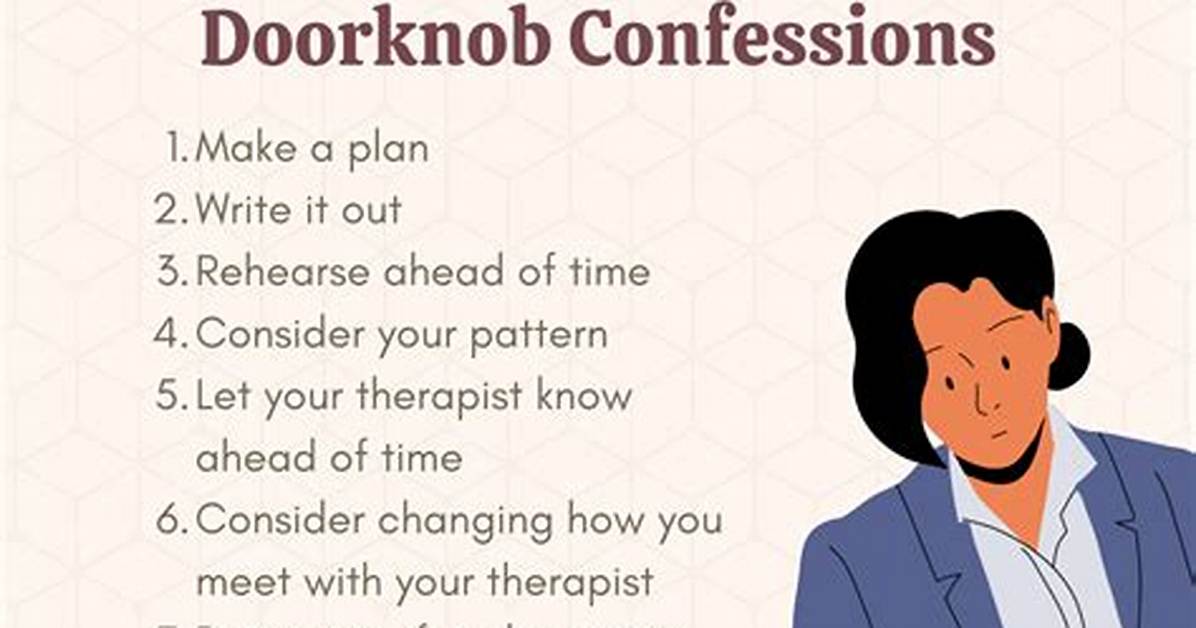
What Are "Doorknob Confessions"? the Way Many End Therapy
Clients, We Are Cauldrons of Emotions. We’re the Less-Than-Predictable Counterpoint to the Composed Professional Seated Nearby. as Our Session Is Nearing the End, We Reveal Something to Our Therapist That Makes Their Head Turn on Its Axis. the Thought Process Behind Doorknob Confessions, Goes Something Like This: “If I Strategically Wait Until I’m Walking out the Door to Tell My Therapist This Big Thing, I Won’t Be Forced to Go into It Right Now, ” Explains Kristin Krivickas, Msw, Lcsw, Mental Health Clinician at Eden Health. Doorknob Confessions Can Also Occur Just as a Client Is Logging off from a Virtual Therapy Session.
Frequently Asked Questions
What’s Behind These Confessions
"Many Times There Is a Shroud of Shame or Guilt That Accompanies These Confessions, ” Explains Daryl Appleton, Ed. D. , M. Ed. , Psychotherapist, and Work/Life Balance Expert. “We Are Hardwired as Humans to Avoid Pain, Including Emotional Hurt That Can Come from Judgment, Guilt, and Shame. ” Clients Might Be Concerned That the Disclosure Will Change the Relationship or Prompt a Referral to Another Therapist.
How Your Therapist Will React
"There Is Always a Bit of Whiplash When You Hear a Doorknob Confession as a Therapist Because Most Times, the Information Comes out of Nowhere, and It Rarely Has Any Connection to What You Were Talking About in the Previous 40 Minutes or So, ” Says Appleton. Therapists Might Initially Feel Anxious, Confused, or Frustrated. These Reactions Are Normal And, in Most Cases, Short-Lived. Therapists Recognize the Vulnerability It Takes to Share Something Impactful and Will Respond to Their Clients with Empathy and Compassion. “As Therapists, I Promise We Won’t Judge You, ” Says Appleton. “We Most Likely Won’t Even Be Shocked by What You Are About to Tell Us, and If We Are, We Likely Have Great Ideas Around Solutions and Resources for You."
What Helps Clients Feel More Comfortable
If It’s Coming up to the End of the Session, Clients Can Consult with Their Therapist About How to Broach a Sensitive Topic. Singer Suggests Starting the Conversation with Something Like, “This Is Difficult for Me to Talk About, but I Need to Tell You. ” Therapists Can Provide Tools and Reflection Exercises Than Can Help Clients Sort Through Complex Emotions and Foster Personal Growth.
Choosing the Right Therapist
Signs of a Good Relationship Include Mutual Trust and Agreement on Therapy Goals, Interventions, and Treatment Options. “The Therapist Should Make You Feel Welcome and Comfortable, ” Says Singer. She Suggests Having a Phone Conversation with the Therapist Before the First Session.
Final Thoughts
My Client’s Disclosure of Sexual Harassment Was the First of Several Experiences with Doorknob Confessions. Looking Back, It Made Me Think of the Immense Privilege Bestowed on Therapists When They Hear Something That Clients Have Been Struggling to Say out Loud. Therapists, Too, Are a Cauldron of Emotions, and the Difference Between Therapists and Clients Is Humbling at Times. Still, Therapy Holds the Promise of Being Accepted and Trusting Someone—Just Like the Sacred Pacts We Once Made over Pinky Swears and Friendship Bracelets.